Why QR Code Payments Took Over Asia and What the West Can Learn
An analysis of how QR code-based payments became the dominant payment method across Asia, the technological and cultural factors behind it, and lessons for the global payments industry.
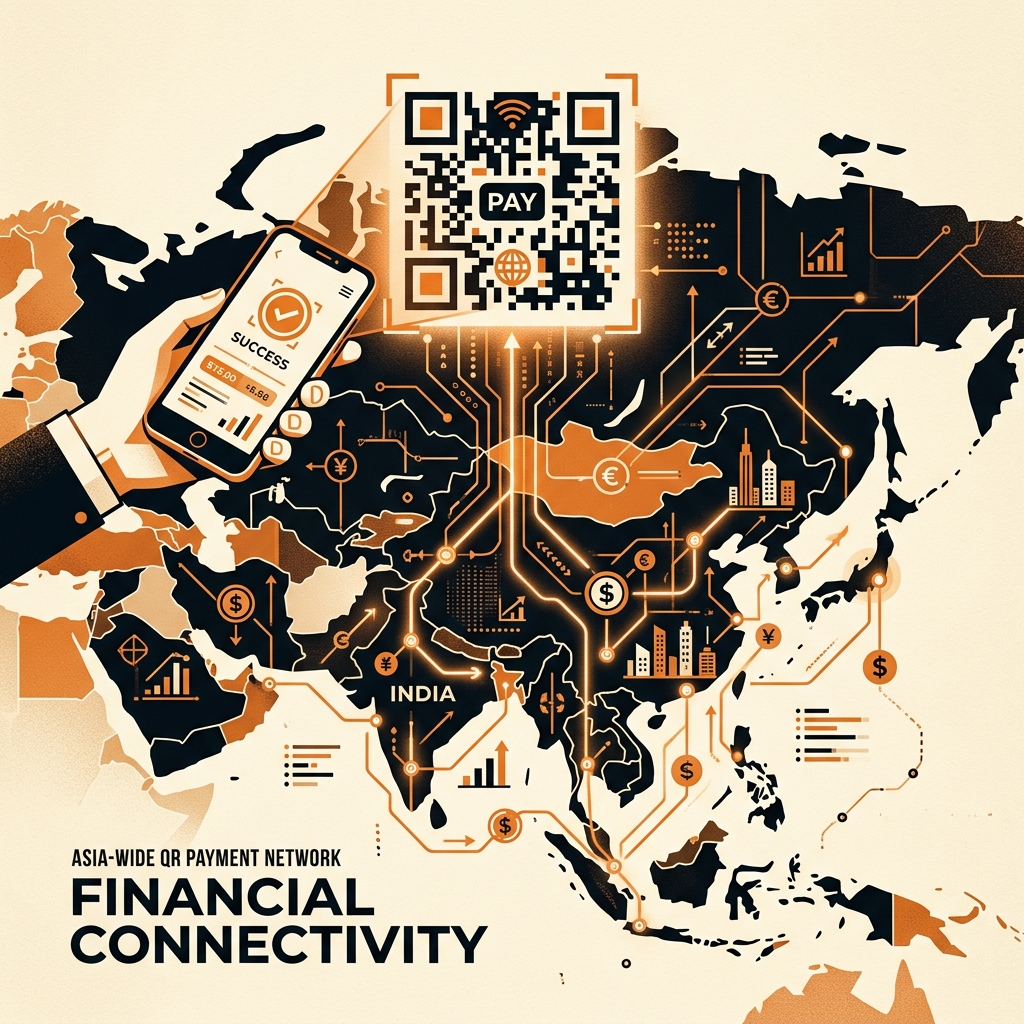
Walk into any street food stall in Mumbai, Shanghai, or Bangkok, and you’ll see the same thing: a laminated QR code taped to the counter. No card terminal, no cash register — just a printed square that processes millions of transactions daily. Meanwhile, in New York or London, the same stall would require a ₹15,000+ card terminal to accept digital payments. This infrastructure gap explains why QR payments conquered Asia while the West clung to cards.
The Infrastructure Advantage
The story of QR payments in Asia isn’t about technology superiority — it’s about timing and economics.
When digital payments began scaling in the 2010s, Western countries had decades of entrenched card infrastructure. Merchants had POS terminals, consumers had credit histories, and the entire ecosystem was built around plastic. Switching to QR codes meant abandoning a working system.
Asia had a different starting point. Most merchants — especially small businesses, street vendors, and rural shops — had never owned a POS terminal. The cost barrier was enormous: ₹15,000-30,000 for hardware, 2-3% per-transaction fees, and monthly maintenance charges. For a chai wallah earning ₹500 a day, traditional card acceptance was economically impossible.
QR codes eliminated this barrier entirely. A merchant needs only a smartphone (or even just a printed paper code) to start accepting payments. The cost of entry dropped from ₹15,000 to effectively ₹0.
This created a network effect: once every street vendor accepted QR payments, consumers had no reason to carry cash. Once consumers stopped carrying cash, even the most reluctant merchants adopted QR codes. India went from 0.9 billion digital transactions in 2016 to over 12 billion monthly UPI transactions by 2025.
The Three Models: How Asia Built QR Payments
India: The Open Standard Model (UPI)
India’s UPI system is unique globally because it’s an open, interoperable standard. Any bank can participate, any app can access the system, and any QR code works with any UPI-capable app. A PhonePe QR code can be scanned with Google Pay, Paytm, or even your bank’s own app.
Key design decisions that drove adoption:
- Zero merchant fees for transactions under ₹2,000 (subsidized by the government)
- Real-time settlement: Money moves between bank accounts in under 5 seconds
- No intermediary wallet: Cash moves directly between bank accounts, not into a locked wallet
- Aadhaar integration: Account opening and KYC verification tied to biometric identity
The result: India processes more real-time digital transactions than the rest of the world combined.
China: The Closed Ecosystem Model (WeChat Pay & Alipay)
China took the opposite approach — two private companies (Tencent’s WeChat Pay and Alibaba’s Alipay) built competing closed ecosystems. You can’t scan an Alipay QR code with WeChat Pay and vice versa.
This sounds less efficient, but the closed ecosystem allowed deeper integration:
- WeChat Pay is embedded in WeChat (used by 1.2 billion people) — you don’t need a separate payment app
- Alipay expanded into credit scoring (Sesame Credit), lending, insurance, and investments
- Both systems handle not just payments but social sharing, bill splitting, and even government services
The closed model allowed rapid innovation at the cost of user lock-in.
Southeast Asia: The “Super App” Model
Countries like Thailand (PromptPay), Indonesia (QRIS), and the Philippines (QRPh) learned from both India and China. They built interoperable national QR standards (like India) but allowed private apps to compete on features (like China).
Thailand’s PromptPay is particularly interesting: it linked citizens’ national ID numbers directly to their bank accounts, creating a universal payment address that works across all banks and apps.
The Cultural Factor: Why Cash Died Faster in Asia
Technology alone doesn’t explain the QR revolution. Cultural factors played an equally important role:
Trust in mobile > trust in institutions: In many Asian countries, consumers had limited experience with traditional banking. Mobile phones became their first and primary financial tool. There was no emotional attachment to credit cards because most people never had one.
Social proof and peer pressure: In China, WeChat’s “red envelope” feature (sending money as digital gifts during festivals) single-handedly onboarded hundreds of millions of users. In India, demonetization in 2016 forced an entire nation to try digital payments simultaneously, creating social proof at massive scale.
Government push: India’s UPI was backed by the central bank (RBI) and the government. China’s regulators allowed WeChat and Alipay to operate with minimal friction for years before introducing regulations. This top-down support accelerated adoption beyond what market forces alone could achieve.
What the West Can Learn
Western countries are now exploring QR-based payments, but adoption faces structural challenges:
-
Incumbent resistance: Visa, Mastercard, and traditional payment processors earn billions from the current card-based system. They have little incentive to support a model that eliminates their per-transaction fees.
-
Consumer habits: Western consumers are trained on card-based rewards programs. A 2% cashback credit card creates strong switching costs — why scan a QR code when your card pays you to use it?
-
Regulatory frameworks: European and American payment regulations were designed around card networks. Adapting them for open QR systems requires legislative changes.
However, the economic pressure is building. Small businesses in the US and Europe pay 2.5-3.5% per card transaction — a significant margin drag. The success of Pix in Brazil (another real-time QR payment system processing 150 million+ monthly transactions) proves the model works outside Asia.
Key Lessons for Consumers
Whether you’re in Asia or watching from elsewhere, the QR payment revolution teaches important personal finance lessons:
- Interoperability benefits consumers: Always prefer open systems where you’re not locked into one app or ecosystem
- Zero-fee payments are possible: If your country offers a free payment system like UPI, use it for appropriate transactions
- Convenience doesn’t mean carelessness: QR payments are fast, but always verify the merchant name and amount before confirming
- Small businesses benefit most: When you pay a local vendor via QR/UPI instead of cash, they get a digital transaction record that helps them access formal credit in the future
The QR code revolution isn’t just about technology replacing cash. It’s about financial inclusion — bringing billions of people and millions of businesses into the formal economy through a technology that costs nothing to deploy and works on any phone. That’s a transformation worth understanding.
PayWise Team
Personal finance enthusiast and tech writer at PayWise. Passionate about making digital finance accessible to everyone through practical, experience-based guides.