Emergency Fund Calculator: How Much Do You Really Need?
A data-driven guide to calculating your ideal emergency fund size based on your actual expenses, job stability, health status, and financial obligations — not generic rules of thumb.
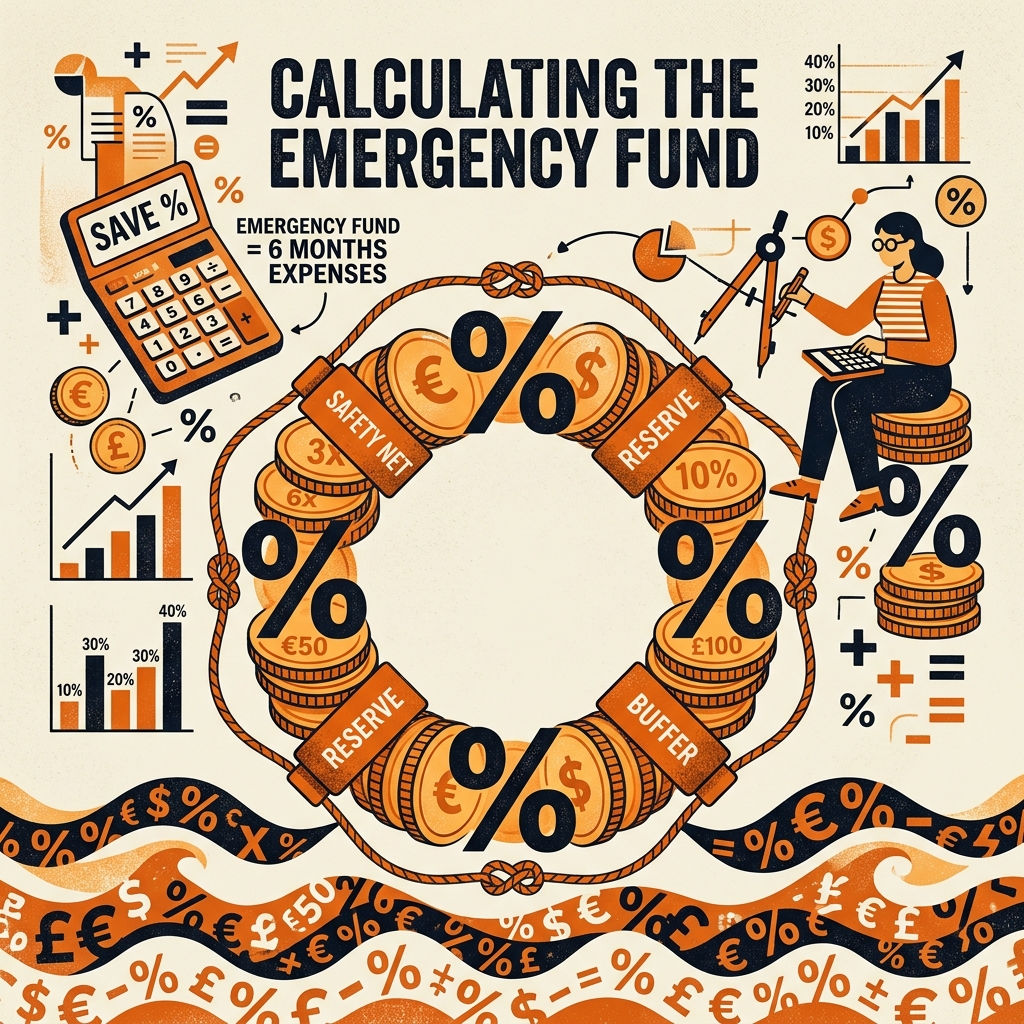
“Save 3-6 months of expenses.” You’ve heard this advice a thousand times. But 3 months and 6 months of expenses can differ by ₹1,50,000 or more. Which is it? The honest answer is: it depends on your specific situation. Generic advice fails because it ignores the variables that actually determine how large your emergency fund needs to be. Let’s build a calculator that accounts for your real life.
Why Generic Rules Fail
The “3-6 months” guideline originated in a pre-digital, predominantly salaried economy where most people had a single employer and predictable income. In 2026, the job market, cost structures, and financial risks look completely different:
- Gig workers might need 8-12 months because income gaps are unpredictable and unemployment insurance doesn’t cover them
- Government employees with guaranteed salaries might be fine with 3 months
- Freelancers with retainer clients fall somewhere in between
- People with dependents face larger potential emergencies than single individuals
The right emergency fund size is a function of your personal risk factors, not a universal number.
The PayWise Emergency Fund Formula
Your ideal emergency fund = Base Monthly Expenses × Risk Multiplier
Step 1: Calculate Your Base Monthly Expenses
This is not your total monthly spending — it’s your survival spending. The absolute minimum to keep a roof over your head, food on the table, and essential services running during a crisis.
Include:
- Rent or EMI payments
- Basic groceries (not dining out)
- Utilities (electricity, water, basic internet, phone)
- Essential insurance premiums
- Minimum debt payments
- Essential medication
- Basic transportation (to job interviews, not Uber rides)
Exclude:
- Dining out, entertainment, subscriptions
- Shopping, gym, personal care luxuries
- SIP/investment contributions (pause these in a crisis)
- Travel, gifts, discretionary spending
For most people, survival expenses are 60-75% of their normal monthly spending.
Example: If your normal monthly spending is ₹45,000, your survival expenses might be ₹30,000.
Step 2: Determine Your Risk Multiplier
Rate each factor on the scale provided and add up your score:
| Risk Factor | Low Risk (1 point) | Medium Risk (2 points) | High Risk (3 points) |
|---|---|---|---|
| Job stability | Government/tenured | Established company, in-demand skills | Startup/contract/gig work |
| Income sources | Multiple (job + freelance + investments) | Single stable salary | Single variable income |
| Health | Young, healthy, good insurance | Moderate health, basic insurance | Chronic conditions or limited insurance |
| Dependents | None | Spouse works, no children | Single income, children/parents |
| Debt load | No debt | Manageable EMIs (< 30% of income) | High EMIs (> 30% of income) |
| Industry risk | Recession-proof (healthcare, education) | Normal cyclicality | Volatile (startups, crypto, real estate) |
Scoring:
- 6-8 points: Multiplier = 3 months (Low risk profile)
- 9-12 points: Multiplier = 6 months (Medium risk profile)
- 13-15 points: Multiplier = 9 months (High risk profile)
- 16-18 points: Multiplier = 12 months (Very high risk profile)
Step 3: Calculate Your Target
Target Emergency Fund = Base Monthly Expenses × Risk Multiplier
Example scenarios:
| Profile | Base Expenses | Score | Multiplier | Target Fund |
|---|---|---|---|---|
| IT professional, single, no debt | ₹28,000 | 7 | 3 months | ₹84,000 |
| Marketing manager, married, one kid | ₹42,000 | 12 | 6 months | ₹2,52,000 |
| Freelance designer, single, student loans | ₹25,000 | 14 | 9 months | ₹2,25,000 |
| Gig worker, family, health issues | ₹35,000 | 17 | 12 months | ₹4,20,000 |
Where to Keep Your Emergency Fund
The emergency fund needs to satisfy three requirements simultaneously:
- Instantly accessible (within 24 hours)
- Not at risk of losing value (no equity, no crypto)
- Earning some return (beating inflation if possible)
Best options:
Tier 1: High-Yield Savings Account + Auto-Sweep FD Keep 1-2 months’ worth in a high-yield savings account (4-6% in India). Enable auto-sweep to FD for the remaining amount — this earns FD rates (6-7%) while remaining instantly accessible if the FD is broken.
Tier 2: Liquid Mutual Funds For amounts exceeding 3 months’ expenses, liquid mutual funds offer 6-7% returns with next-day withdrawal. Slightly less accessible than savings accounts but better returns for the portion you’re unlikely to need immediately.
Tier 3: Short-Term FDs (for the last portion) If your target is 9-12 months, the last 3 months’ worth can sit in a 6-month FD earning 7-8%. You’ll unlikely need this portion urgently, and the FD can be broken with minimal penalty if a true crisis hits.
What NOT to use: Fixed deposits with lock-in periods, equity mutual funds, stocks, real estate, gold, or cryptocurrency. These either lock your money, lose value during crises, or take too long to liquidate.
Building Your Fund: The Realistic Timeline
If your target is ₹2,52,000 and you can save ₹12,000/month toward it, you’ll reach your target in 21 months. That feels long, but the key insight is: partial emergency funds still protect you.
- At ₹84,000 (month 7): You can handle a sudden medical bill or urgent home repair
- At ₹1,68,000 (month 14): You can survive 4 months of unemployment
- At ₹2,52,000 (month 21): Full protection achieved
Don’t wait until the fund is “complete” to feel secure. Every month of savings added is risk reduced.
Emergency Fund vs. Opportunity Fund
A common question: “Should I use my emergency fund for a great investment opportunity?”
No. Never. The emergency fund’s purpose is psychological security and practical protection, not growth. The moment you start raiding it for opportunities, it stops being an emergency fund and becomes savings — savings that might not be there when you actually have an emergency.
If you want to invest in opportunities, build a separate “Opportunity Fund” after your emergency fund reaches its target. Keep them in different accounts so the mental separation is clear.
Action Steps
- Calculate your survival expenses using the framework above
- Score your risk factors and determine your multiplier
- Set up a dedicated emergency fund account (separate from your spending account)
- Set an automatic monthly transfer toward your target
- Track progress monthly — watching the fund grow is surprisingly motivating
- Once funded, redirect those automatic transfers toward investments
Your emergency fund isn’t an investment — it’s insurance. And like all insurance, its value is measured not by returns but by the catastrophe it prevents.
PayWise Team
Personal finance enthusiast and tech writer at PayWise. Passionate about making digital finance accessible to everyone through practical, experience-based guides.